The Survival Trap: Why Reality-Based Self-Defense Loses 60% of Adults in 90 Days
Traditional martial arts rely on belt promotion ceremonies, form (kata) mastery, or sporting tournaments to validate progress. Krav Maga, however, was forged in the furnace of existential survival: fast, brutal, and pragmatic. There are no medals, no weight classes, and no competitive podiums. While this authenticity draws a massive surge of adult practitioners seeking practical self-defense, fitness, and functional empowerment, it conceals a dangerous business liability: the Reality-Based Churn Paradox.
Without a structured, visible mechanism to track individual skill progression, adult students hit a psychological plateau between day 45 and day 90. They leave your academy not because your instruction is flawed, but because they cannot perceive their own growth. When every class consists of high-intensity pad work, visceral choke defenses, and chaotic aggression drills, training becomes an indistinct blur of exhaustion.
Adult learners are driven by metrics, competence acquisition, and tangible progress. When a 38-year-old executive or busy parent pays $180 to $250 a month, subjective feedback like "good punch, hit harder next time" no longer sustains long-term lifetime value (LTV). If you want to scale your school, reduce adult churn below 3% per month, and build high-retention Graduate and Expert cohorts, you must replace ambiguity with measurable Evolution Metrics.
The Science of Adult Retention: Quantifying Skill Progression Without Sport
Ready to eliminate admin burden and student churn?
Dojo10 automates belt gradings, QR Code attendance, recurring billing, and clan gamification. No credit card required.
Adult learning theory (andragogy) establishes that mature students require clear self-evaluation mechanisms to maintain intrinsic motivation. In combat sports such as Brazilian Jiu-Jitsu or Muay Thai, the feedback loop is immediate: you either submit your partner or survive the sparring round. In Krav Maga, where lethal or disabling tactics (e.g., groin strikes, eye gouges, throat strikes) cannot be executed at 100% force on live partners, sparring is inherently synthetic.
When safety limits realism, students lose the natural feedback loop of physical combat. This cognitive void breeds two fatal student behaviors: 1. The Imposter Plateau: Students feel that despite months of sweat, they would still freeze in a real violent encounter, leading to quiet dropouts. 2. Aggression Burnout: Students experience sympathetic nervous system (SNS) exhaustion from unstructured, repeated adrenaline dumps without tracked adaptation.
To bridge this gap, elite Krav Maga institutions adopt the Hick-Hyman Law of motor response and the Yerkes-Dodson Human Performance Curve. Progression is quantified not by how exhausted the student is at the end of class, but by how their reaction latency drops, how their defensive bursting stabilizes under elevated heart rates (140–170 BPM), and how their structural mechanics hold under fatigue.
The 5-Pillar Krav Maga Evolution Metric Architecture (K-EMA)
To build an enterprise-grade retention engine, Krav Maga academy owners must evaluate adult students across five standardized, objective performance vectors.
+-------------------------------------------------------------------------+
|               KRAV MAGA EVOLUTION METRIC ARCHITECTURE                   |
+-------------------+-----------------------------------------------------+
| 1. Reaction Index | Latency (ms) from visual threat to defensive burst  |
| 2. Striking Power | Kinetic output & stability under sustained fatigue  |
| 3. Stress HR Zone | Mechanical fidelity at 75-85% Max Heart Rate        |
| 4. Tactical Scan  | De-escalation positioning & 360-degree environmental |
| 5. Velocity Check | Class attendance pacing and skill retention cadence |
+-------------------+-----------------------------------------------------+
Pillar 1: Defensive Reaction Latency Index (RLI)
Measure the speed of physical intervention against stimulus. Using standardized feeds (e.g., padded stick swings, surprise front-choke simulations), instructors assess whether the student's defensive reaction occurs in the reflexive autonomic zone (<350 milliseconds) or remains in the cognitive processing zone (>700 milliseconds).
Pillar 2: Striking Force & Structural Economy (SFSE)
Measure striking volume, balance recovery, and power preservation. Instead of generic bag work, test students on a 60-second heavy-bag barrage measuring total strikes delivered with correct structural alignment (wrist integrity, hip rotation, chin tucked), comparing strike volume between Round 1 and Round 3.
Pillar 3: Stress-Inoculation Threshold (SIT)
Evaluate whether students maintain tactical motor mechanics under high biological stress. Utilizing basic wearable heart-rate monitors, track students performing technical defenses (e.g., defense against straight punch with counter) while their heart rate sits in the 140–165 BPM bracket.
Pillar 4: Tactical Environmental Scan & Boundary Discipline (TES)
Self-defense ends only when the practitioner has safely extracted themselves from danger. This metric tracks whether a student drops their hands immediately after a strike or automatically completes a full 360-degree tactical scan, checks escape routes, and adopts an active ready stance.
Pillar 5: Milestone Attendance Velocity (MAV)
Data demonstrates that adult students who attend fewer than 2.1 sessions per week during their first 60 days have an 81% probability of churning. Tracking attendance cadence alongside technical scores creates an early-warning retention system.
Practical Implementation Blueprint: The 12-Week Evolution Cycle
Implement this systematic, 4-step framework across your adult Krav Maga classes to deliver transparent, data-driven progression.
[Week 1: Baseline Audit] ---> [Weeks 2-6: Skill Sprints] ---> [Week 7: Stress Inoculation] ---> [Week 12: Level Validation]Step 1: Baseline Metric Audit (Week 1)
During the student's initial intake or at the start of a 12-week cycle, document baseline metrics: * Reaction Benchmark: Record reaction time against an unexpected visual cue (straight punch defense feed). * Cardio-Mechanical Benchmark: 90 seconds of continuous palm strikes, hammer fists, and straight knees on a striking shield. Record total strikes and form breaks. * Baseline Scorecard: Issue the student their digital "Evolution Blueprint" showing their current readiness score.
Step 2: Bi-Weekly Micro-Testing Rounds (Weeks 2–6)
Dedicate the final 10 minutes of Thursday and Saturday classes to targeted micro-assessments. Instructors evaluate one technical vector using a 1-to-5 metric scale. * Format: 3 rounds x 2 minutes. Round 1:* Technique isolation against static feeds. Round 2:* Variable resistance and audio-visual distractions (flashing cues, verbal pressure). Round 3:* Fatigue challenge (10 burpees into immediate defense execution).
Step 3: Mid-Term Stress Simulation (Week 7)
Run students through an objective, closed-door scenario drill simulating environmental duress. Score students on technical response, verbal boundary enforcement, release execution, and rapid egress. Students receive immediate, documented scoring on where their mechanics fractured under adrenaline.
Step 4: The Evolution Review and Level Pacing (Week 12)
Eliminate anxiety-inducing, opaque testing rituals. Replace 4-hour weekend belt tests with an Objective Evolution Review. If a student has logged their required attendance hours and hit their benchmark metric scores across the 12-week cycle, their level advancement is a mathematical certainty, not a subjective instructor whim.
Krav Maga Authentic Curriculum & Metric Milestone Matrix
This matrix outlines the objective operational benchmarks required across standard Krav Maga adult rank gradations (Practitioner Levels P1 to Graduate Level G1).
| Rank / Level | Authentic Core Curriculum & Techniques | Performance Metric Benchmark | Biomechanical Stress Criteria |
|---|---|---|---|
| Practitioner 1 (P1) | Hagana Pnimit (Inside Defenses), Hagana Maagalit (360 Defenses), Straight Punches, Palm Strikes, Groin Kicks, Basic Breakfalls | Reaction Latency < 600ms; Complete 360 defense with simultaneous counter strike | Mechanics maintained at 130–140 BPM; Zero backward stumbling on recovery |
| Practitioner 2 (P2) | Releases from Chokes (Front, Side, Rear - Pluck & Counter), Releases from Shirt Grabs, Defensive Side/Roundhouse Kicks | Choke neutralization initiated within 400ms of tactile contact; Immediate forward burst | Counter-strike output > 3 strikes within 2 seconds post-release |
| Practitioner 3 (P3) | Defenses against low kicks, Headlock releases (standing and ground), Defense against Bearhugs (arms free/pinned) | Headlock defense executed under full partner resistance within 3 seconds | Maintain stable base during sprawl; Reset to fighting guard under fatigue |
| Practitioner 4 (P4) | Defense against Front Kick, Defense against Overhand/Hook punches, Ground movement and survival positions, Knife Threat basics | Successful evasion/parry and aggressive counter-burst against dynamic strikes | Sustained technical output over 3 consecutive 2-minute fatigue rounds |
| Practitioner 5 (P5) | Defense against downward and horizontal Knife Attacks (360 + 2-on-1 grip wrap), Basic Stick Disarms, Aggression Drills | Knife defense lock-in achieved before secondary strike cycle initiates | 85% heart-rate capacity; Complete situational scan and egress protocol |
| Graduate 1 (G1) | Advanced Stick Defenses, Multi-Attacker Dynamics (2-3 opponents), Hostage Scenarios, High-Stress Tactical Decision Scenarios | Neutralize primary threat and position aggressor as a human shield within 4 seconds | Clean tactical pathing without tunnel vision or partner collision |
Common Pitfalls and How Elite Academies Avoid Them
- Pitfall 1: Confusing Exhaustion With Evolution.
- The Mistake:* Running boot-camp style conditioning classes disguised as Krav Maga, leaving students physically crushed but technically stagnant.
- Elite Solution:* Track technical consistency and strike precision under fatigue rather than celebrating sheer biological failure. Progression is measured in tactical control, not vomit buckets.
- Pitfall 2: Subjective, Opaque Promotion Standards.
- The Mistake:* Instructors gatekeeping rank advancements based on "instinct" or "fighting spirit," creating student resentment and anxiety.
- Elite Solution:* Publish transparent rubrics based on the K-EMA system. When every student knows precisely what latency score and attendance velocity is required to reach P3, progress is fully demystified.
- Pitfall 3: Neglecting Micro-Victories for Older Adults.
- The Mistake:* Measuring a 45-year-old beginner against a 22-year-old competitive athlete.
- Elite Solution:* Personalize the metric baselines. Measure every student against their own historical onboarding baseline. Showing a working mother that her reaction speed has sharpened by 35% over eight weeks creates permanent institutional loyalty.
How Technology & Dojo10 Automates This Operational Standard
Manually recording reaction times, technical competency markers, and attendance trends on clipboards or spreadsheets is operationally unsustainable for a high-volume academy. Dojo10 delivers the automated technological infrastructure required to run the Krav Maga Evolution Metric Architecture without draining instructor bandwidth.
- Automated Evolution Checkpoints: Dojo10 allows instructors to record micro-evaluations pad-side on any mobile device in under 15 seconds. Track technique mastery across authentic Krav Maga curriculums with customizable visual rubrics.
- Predictive Churn Detection: The platform tracks each adult student’s Milestone Attendance Velocity (MAV). If a practitioner’s attendance drops below their retention threshold, Dojo10 triggers proactive retention workflows, alerting staff to re-engage the student before cancellation occurs.
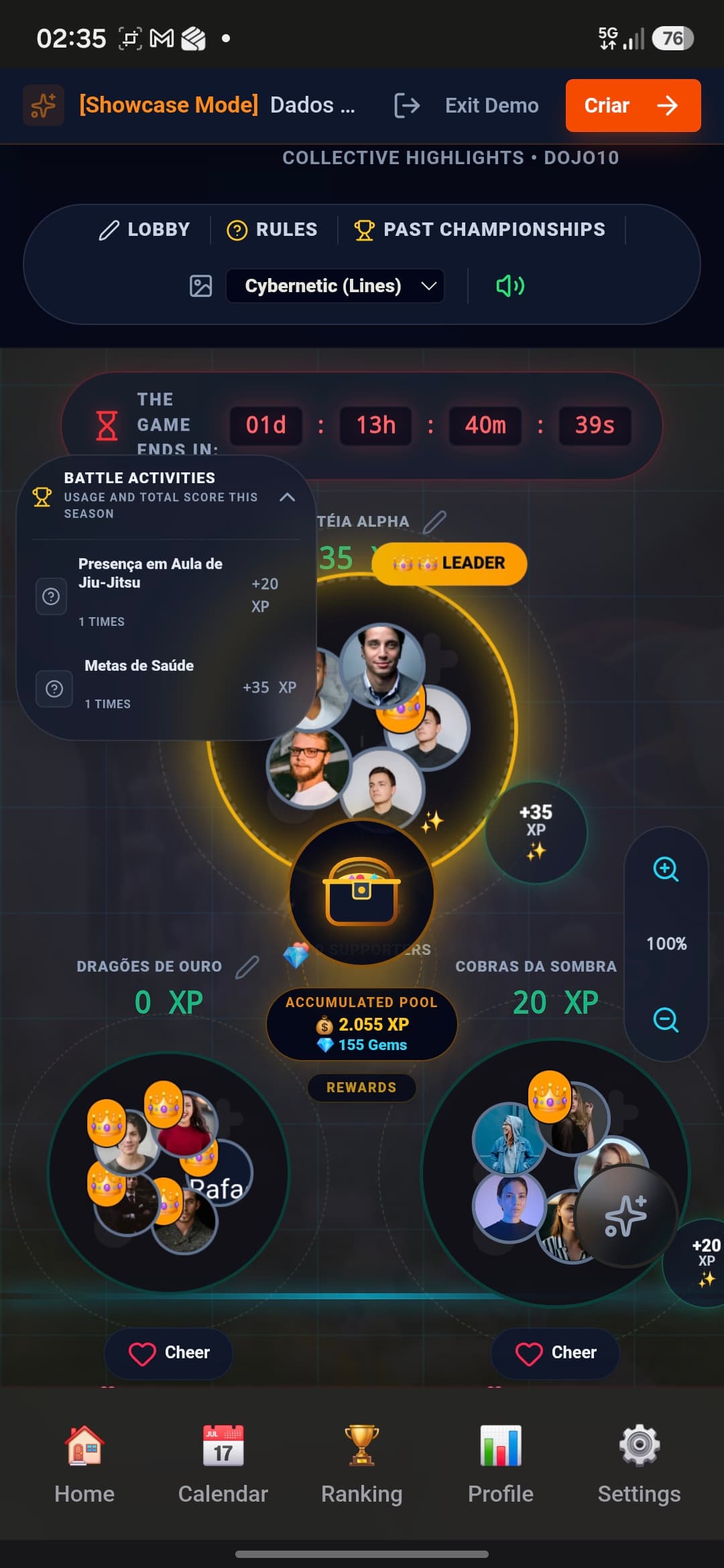
- Transparent Student Mobile Portals: Students access real-time visual charts tracking their technical mastery, stress thresholds, and syllabus progress. When adult learners visibly track their progression from P1 to G1 on their smartphones, perceived value skyrockets, elevating lifetime retention and referral rates.
Conclusion: The Professional Path Forward
Krav Maga is dedicated to preserving human life. As academy directors and martial arts professionals, our duty is to ensure our students remain on the mat long enough to truly internalize those life-saving skills. By replacing antiquated, subjective training dogmas with rigorous, science-backed Evolution Metrics, you honor the tactical roots of Krav Maga while building a sustainable, resilient, and highly profitable martial arts business.
Official Martial Arts Management Matrix & Evaluation PDF
Download our comprehensive comparison matrix in PDF and see how fight gyms save 15+ hours weekly.