# Attendance Challenges, Badges, and Leaderboards in Krav Maga: A Practical and Operational Guide
Krav Maga is, by definition, a pragmatic, reality-based self-defense system engineered for survival in real-world violent encounters. Unlike traditional competitive combat sports such as Brazilian Jiu-Jitsu or Judo, Krav Maga does not have sport tournaments, points, or medals. The absence of a competitive circuit presents a fundamental business challenge for school owners and chief instructors: How do you keep adult students highly engaged, consistent on the mats, and motivated over months and years of hard training?
Many gym operators mistakenly believe that gamification—using game mechanics such as points, badges, and leaderboards—trivializes reality-based self-defense or dilutes its serious, tactical ethos. In reality, when designed through a tactical and behavioral psychology framework, gamification becomes the most potent student retention system available to modern martial arts schools.
In this complete guide, you will learn how to design and execute an operational system of Attendance Challenges, Tactical Badges, and Consistency Leaderboards tailored for Krav Maga, preserving authentic self-defense standards while scaling your school's Lifetime Value (LTV).
The Krav Maga Gamification Dilemma: Driving Engagement Without Diluting Tactical Sobriety
The Krav Maga demographic is predominantly adult, seeking practical efficiency, stress inoculation, functional conditioning, and real-world personal protection capabilities. If your school implements cartoonish badges, arcade sound effects, or trivial point systems, adult students will reject it immediately.
Conversely, relying solely on an adult student's raw willpower to show up three times a week to high-intensity, stress-induced training leads to a predictable churn cycle: 1. Months 1 to 3: Initial excitement and high attendance (the honeymoon phase). 2. Months 4 to 6: Technical learning plateau combined with skipped classes due to fatigue, injuries, or professional schedules. 3. Months 7 to 9: Habit breakdown, attendance dropping to once a week, followed by cancellation (churn).
Tactical gamification bridges the gap between novelty and long-term mastery. It turns the invisible daily discipline of mat consistency into tangible, recognized progression. The goal is never to reward who hits the hardest or who wins a sparring round; it is to reward discipline, operational readiness, and consistency on the mats.
Neurobiological and Pedagogical Foundations of Tactical Gamification
Ready to eliminate admin burden and student churn?
Dojo10 automates belt gradings, QR Code attendance, recurring billing, and clan gamification. No credit card required.
To run this framework effectively, school operators must understand the psychological triggers activated in adult practitioners:
- 1Dopamine Loops and Micro-Rewards: Mastering complex defensive protocols (such as defending against violent chokes or edged-weapon threats) requires hundreds of repetitions under stress. Badges and milestone markers act as intermediate rewards that trigger dopamine releases, keeping the student's brain invested throughout the multi-year journey.
- 2Loss Aversion via Streaks: When an adult practitioner builds an unbroken attendance streak (e.g., training 3 times per week for 6 consecutive weeks), cognitive loss aversion sets in. Students are far less likely to skip a demanding Friday night class because they refuse to break their active streak.
- 3Tactical Operator Identity: Earning functional badges tied to demanding training achievements (e.g., completing 50 Stress Drill sessions) reinforces the student's self-image as a disciplined, resilient, and prepared individual.
4-Step Operational Implementation Blueprint for the Mat
Step 1: Attendance Challenge Architecture (Streaks & Hardness Challenges)
Attendance challenges should not be arbitrary; they need clear operational goals, structural parameters, and definitive time windows.
- The First 30 Days Welcome Protocol: Built to wire the initial habit. New students who attend 12 classes within their first 30 days earn the digital badge and physical Velcro patch: "Tactical Initiation Protocol."
- 90-Day Hardness Streak: Requires maintaining a minimum of 8 classes per month for 3 consecutive months. This challenge targets and neutralizes the classic 90-day drop-off cliff.
- Night Owl / Dawn Patrol Challenges: Targeted campaigns for non-peak class slots (e.g., 6:00 AM or 8:30 PM), driving mat occupancy into traditionally underutilized timetable blocks.
Step 2: Tiered Badge System Based on Tactical and Physiological Milestones
Badges should be organized into three operational tiers directly aligned with reality-based self-defense:
- 1Operational Consistency Badges: Tied directly to audited class check-ins (e.g., 100 Mat Sessions, 250 Combat Hours).
- 2Resilience & Stress Badges: Awarded for participating in high-intensity specialized workshops (e.g., Stress Drill Marathon, Low-Light/Strobe Defense, Close Quarters Battle / Confined Spaces).
- 3Curriculum Mastery Badges: Aligned with belt or level ranks (Practitioner, Graduate, Expert levels), certifying completion of specialized skill blocks like 360° Defense Series, Stick Disarmament, or Ground Survival Protocols.
Step 3: Tactical Leaderboards (Ranking Without Toxic Competition)
A Krav Maga leaderboard should NEVER measure who taps out or defeats sparring partners. Doing so breeds reckless aggression, elevates injury rates, and ruins collaborative mat culture. Instead, leaderboards must track Operational Discipline Metrics:
- Regular Class Check-in: 10 points per verified class.
- Stress Drill / Specialized Workshop: 25 points.
- Early-Bird Check-in Bonus: 5 points for checking in at least 10 minutes prior to warm-up.
- On-Time Monthly Renewal / Auto-Debit: 50 points.
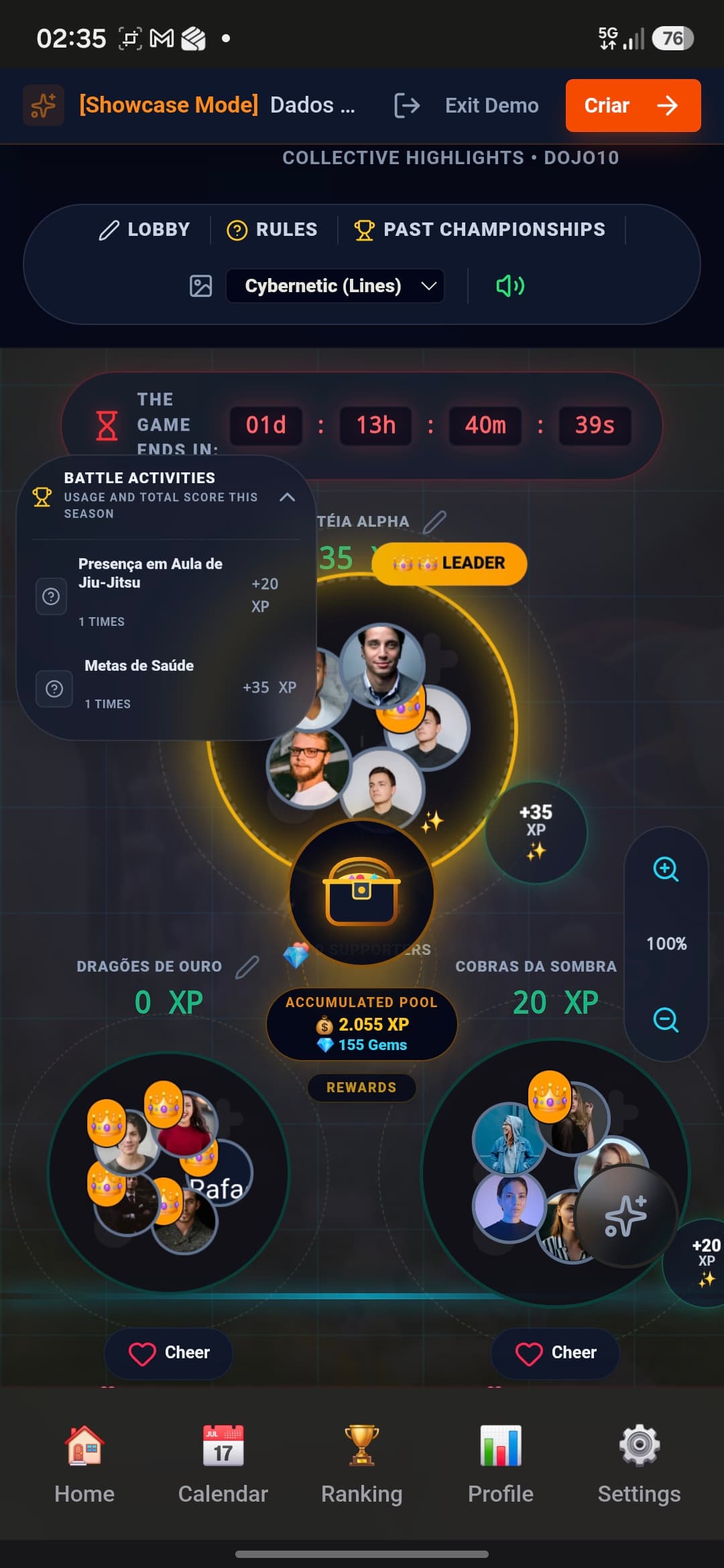
The leaderboard displays inside the student mobile app and on a screen in the lobby/reception area. It resets on the 1st of every month so that brand-new students can realistically contend for top placement every cycle.
Step 4: Recognition Ceremonies and Mat Culture
Presenting physical patches or digital recognitions should carry ceremonial gravity. At the end of class, before final line-up and bowing out, the head instructor calls the student forward, announces the milestone (e.g., "Carlos has just logged 100 tactical consistency hours"), and issues the award inside the Dojo10 app and/or presents the uniform patch. Public social validation in front of peers fosters genuine esprit de corps across the squad.
Comparison Matrix: Traditional Management vs. Dojo10 Tactical Gamification
| Assessment Metric | Traditional Approach (No Gamification) | Dojo10 Tactical Gamification |
|---|---|---|
| Primary Retention Metric | Passive membership dues payment | Audited weekly attendance and active streaks |
| Motivation Focus | Infrequent belt exams (every 6–12 months) | Bi-weekly micro-milestones and tactical badges |
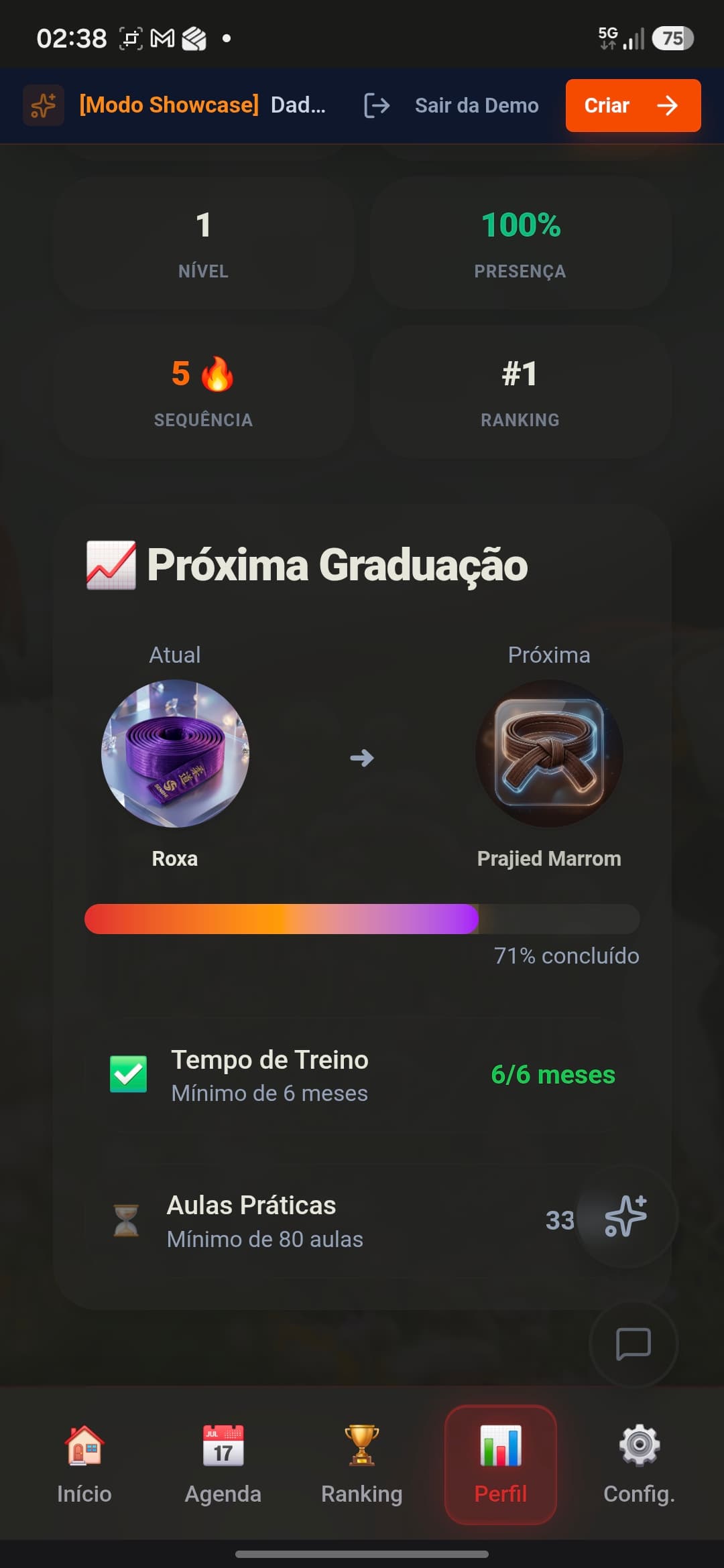
| Student Visibility | Blind to personal attendance trends | Real-time dashboard of attendance, badges, and ranking |
| Leaderboard Logic | None, or driven by sparring wins | Exclusively driven by discipline, attendance, and resilience |
| First 90 Days Engagement | Low (highest industry churn period) | Exceptionally high (structured onboarding challenges) |
| Instructor Administrative Load | Manual tracking via paper sheets or spreadsheets | 100% automated via cloud platform and student app |
| Curriculum Alignment | Generic repetition without recorded milestones | Module-based attendance tracking (e.g., 360° Defense, CQB) |
Critical Mistakes in Krav Maga Gamification and How to Avoid Them
- 1Scoring Sparring Performance: Assigning points for "taps," knockdowns, or dominance in Krav Maga sparring leads directly to catastrophic injuries, egos on the mat, and legal liability. Limit scoring strictly to attendance, punctuality, and special event participation.
- 2Using Childish Themes: Steer clear of arcade game graphics or fantasy titles that alienate professional adults. Use operational terminology such as Operator, Readiness, Resilience, Tactical Module, Stress Drill, and 360° Protocol.
- 3Failing to Reset Leaderboards: If scores accumulate perpetually, veteran students will dominate the top ranks indefinitely, demoralizing beginners. Implement monthly rolling resets and split rankings (e.g., New Recruits < 6 Months vs. Veteran Students).
- 4Relying on Manual Spreadsheets: Tracking points, attendance streaks, and badge deliveries using clipboards or spreadsheets burns hours of administrative time and results in data errors. Digital automation is mandatory.
Operational Automation with Dojo10: Turning Gamification into Real Retention
The Dojo10 platform was built to remove the administrative friction of running high-performance martial arts academies and reality-based self-defense facilities. With Dojo10, your entire tactical gamification ecosystem runs on autopilot:
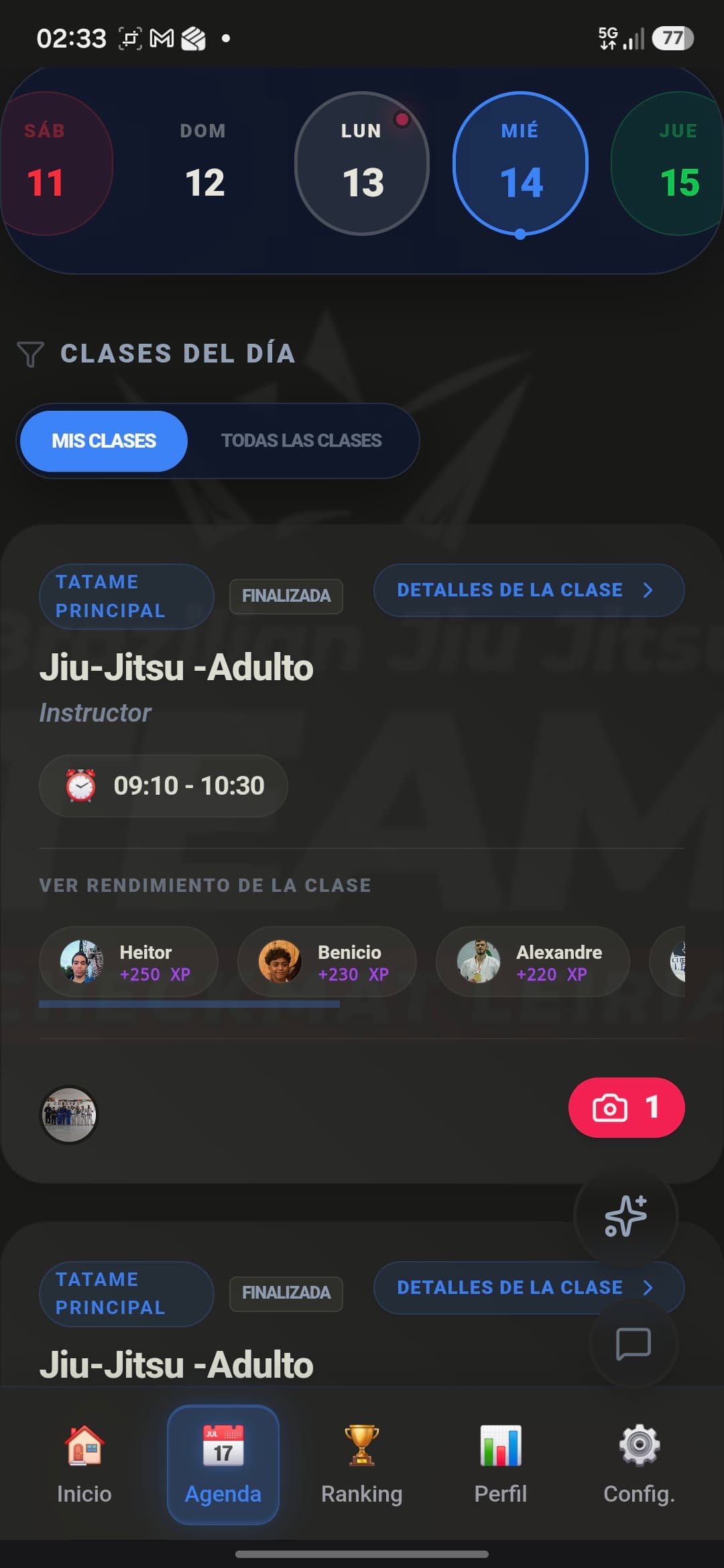
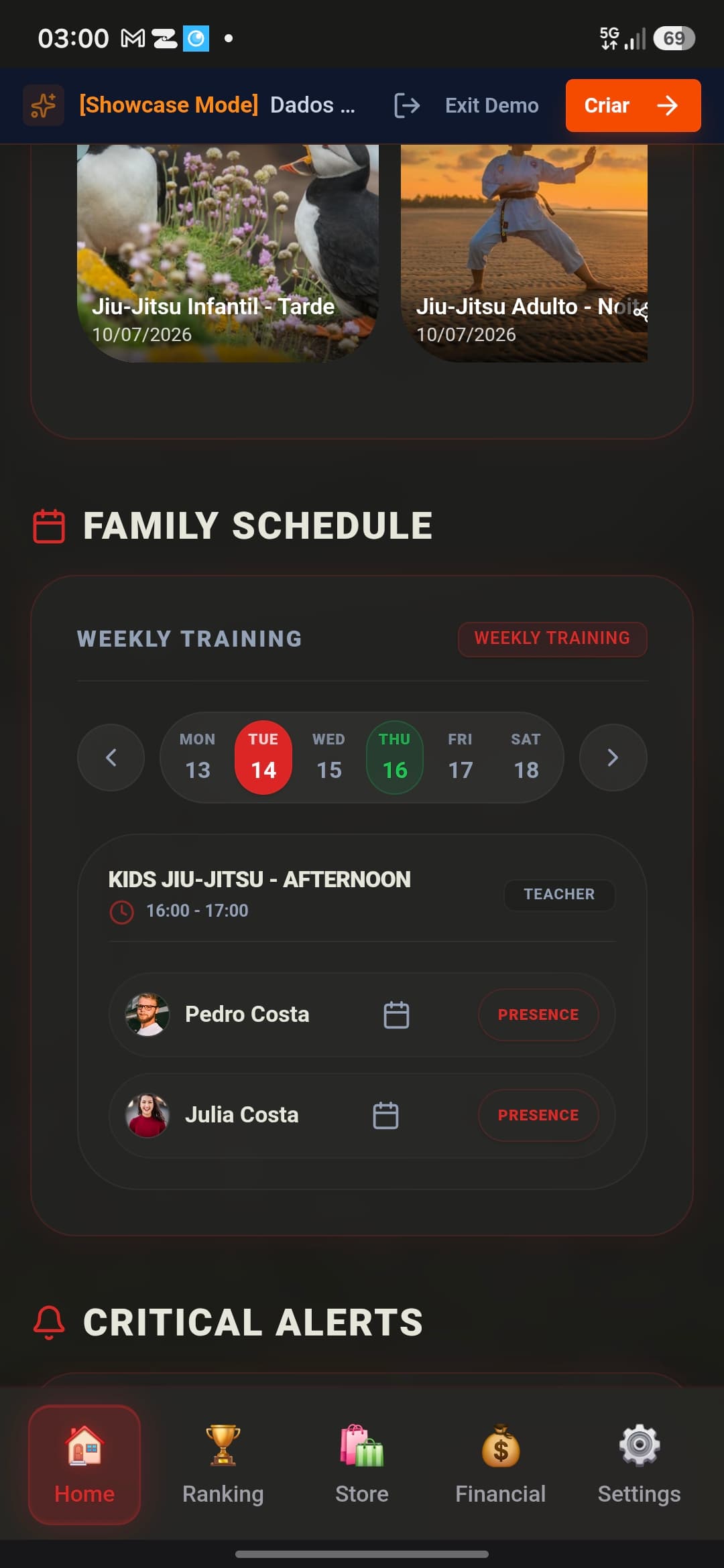
- Smart Check-in & Attendance Auditing: Students check in via self-service QR code, mobile app, or kiosk upon entering. Attendance is instantly credited to their tactical profile.
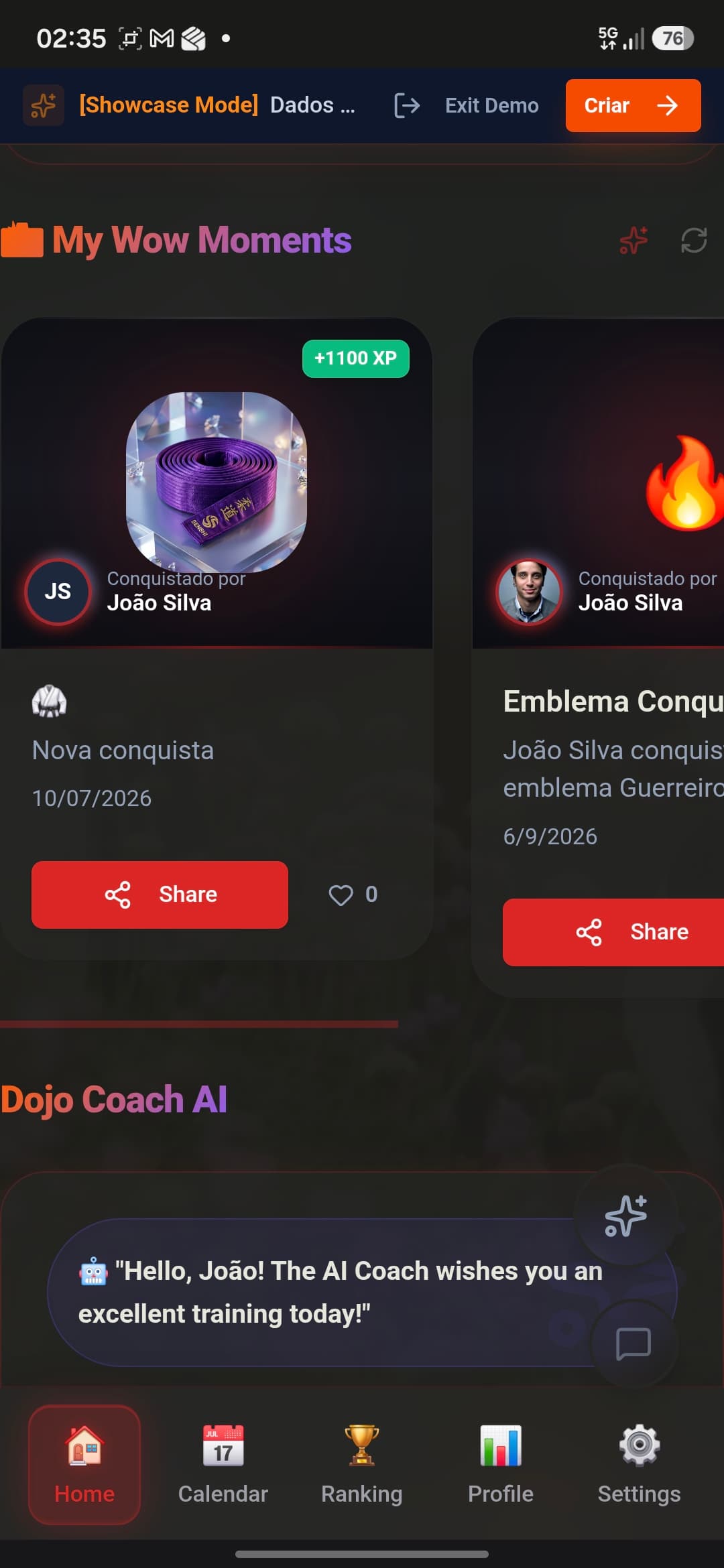
- Automated Badge Delivery: When a practitioner hits 12, 50, or 100 sessions, or completes a 90-day challenge, Dojo10 instantly awards the digital badge to their profile and delivers an automated congratulatory push notification.
- Real-Time Digital Leaderboards: Attendance leaderboards calculate automatically and can be cast to reception screens or viewed inside the student app, driving healthy accountability.
- Predictive Churn Detection: If a student on an active streak drops off and misses training for 7 consecutive days, Dojo10 immediately flags the profile and alerts staff to initiate a proactive retention touchpoint before the student drops out.
Conclusion: Tactical Discipline Meets Retention Science
Upholding the technical purity and combative intensity of Krav Maga does not require running your school on antiquated management models. Modern tactical gamification does not water down what you teach on the mat—it ensures that your students consistently show up to the mat week after week, month after month, and year after year.
By leveraging objective attendance metrics, visual badge progression, and the automated power of Dojo10, your Krav Maga school builds an elite, committed community while securing predictable business growth.
Official Martial Arts Management Matrix & Evaluation PDF
Download our comprehensive comparison matrix in PDF and see how fight gyms save 15+ hours weekly.