The Silent Bleed: Why Boxing Academies Lose 40% of Members by Month Three
Boxing possesses one of the highest customer acquisition potentials in the entire combat sports landscape. Drawn by cinematic romanticism, explosive functional conditioning, and real-world self-defense utility, prospects flood through the doors. Yet within sixty to ninety days, the vast majority quietly vanish.
Traditional gym operators dismiss this attrition as a natural filtering process, rationalizing that "boxing isn't for everyone." This is a catastrophic commercial mistake. The primary driver of member churn in boxing is not the intense physical demand—it is the pedagogical ambiguity of the training session.
In standard boxing formats, an adult beginner spends three to six rounds on the heavy bag, subjected to generic verbal imperatives: "Keep your hands up!", "Work the jab!", "Don't stop punching!" The student finishes soaked in sweat, completely depleted, but pedagogically blind. Without tangible benchmarks, the novice brain interprets physical exhaustion without clear technical mastery as pure punishment rather than progress.
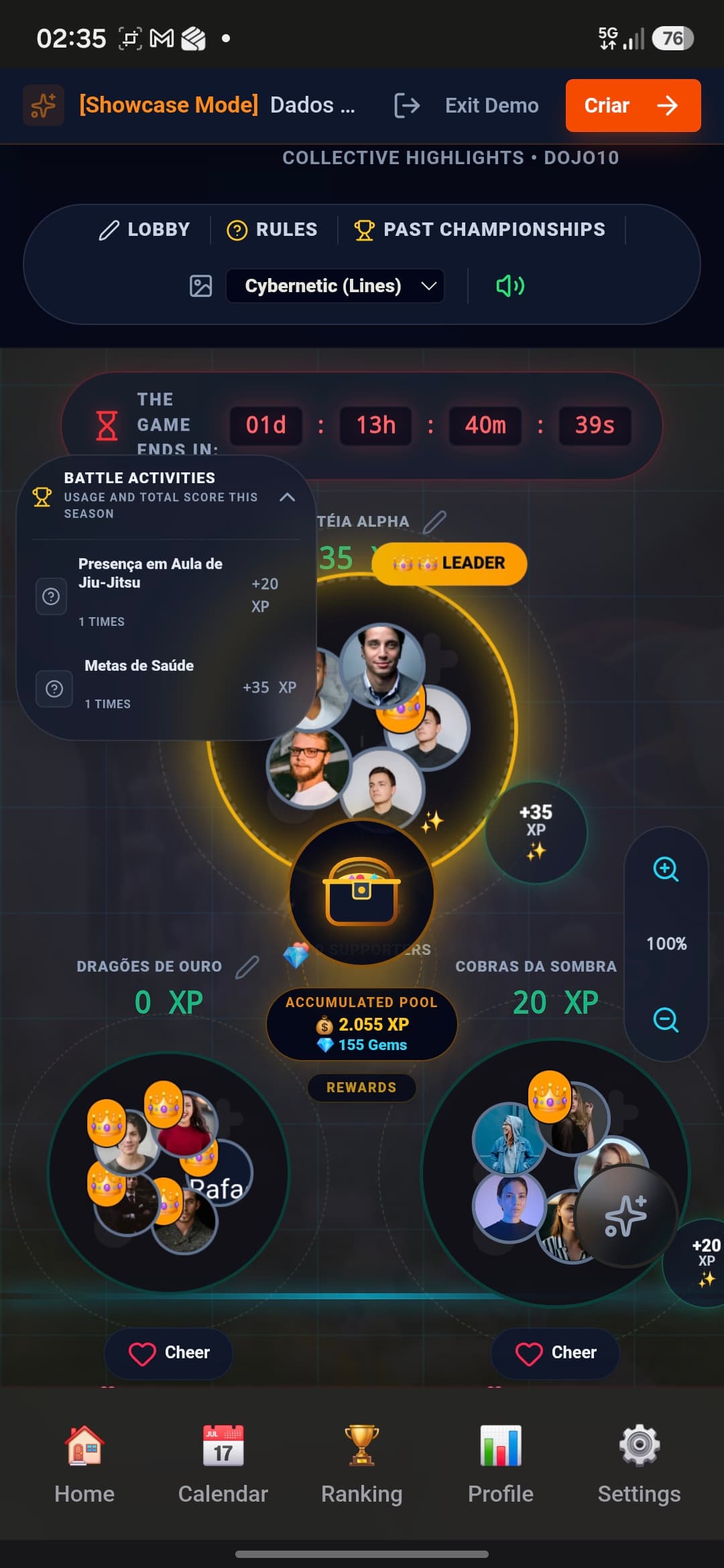
When lactic acid accumulation is uncoupled from measurable accomplishment, retention plummets. To build a resilient, recurring revenue model, academy owners must replace open-ended, chaotic exertion with structured, gamified Round Goals.
The Neuro-Pedagogy of Round Goals: Transforming Exhaustion into Micro-Mastery
Ready to eliminate admin burden and student churn?
Dojo10 automates belt gradings, QR Code attendance, recurring billing, and clan gamification. No credit card required.
To arrest churn, we must examine the intersection of motor skill acquisition and behavioral psychology. Under Edward Deci and Richard Ryan’s Self-Determination Theory, intrinsic motivation flourishes under three conditions: Autonomy, Relatedness, and Competence.
Traditional boxing classes routinely destroy the student's perceived competence. When a student stands before a heavy bag for three minutes with no defined target other than "punch until the bell rings," cognitive overload sets in. They default to wild, biomechanically flawed punches, experience rapid cardiovascular distress, and end the round feeling uncoordinated and inadequate.
Traditional Model: Exhaustion -> Ambiguity -> Frustration -> Month 2 Churn
Gamified Model:   Constraint -> Clear Target -> Dopamine Hit -> Long-Term Retention
By contrast, introducing specific Round Goals creates a defined operational constraint. When an instructor dictates that Round 3 is dedicated exclusively to the 1-2-Slip-2 combination with an objective benchmark of twenty clean, defensively sound repetitions, the student's focus narrows.
This constraint-led approach triggers the psychological state of Flow (Csikszentmihalyi). When challenge level precisely matches technical capacity and provides real-time progress feedback, the human brain releases dopamine rather than exclusively cortisol. The athlete leaves the ring or heavy bag station not merely exhausted, but validated. Mastery becomes visible, trackable, and habit-forming.
The 4-Stage Round Goal Architecture for Elite Boxing Academies
Implementing gamified round goals does not require diluting the sweet science; it requires institutionalizing pedagogical rigor. Below is the operational framework engineered by elite academies to transition from chaotic padwork to systematized progression.
   [Stage 1: Taxonomy]       --> Establish Objective Round Categories
            |
   [Stage 2: Tiering]        --> Calibrate Micro-Goals by Skill Tier
            |
   [Stage 3: Verification]   --> Deploy Peer-Audited Real-Time Scoring
            |
   [Stage 4: Gamification]   --> Digitize Data into Visual Ranks & Badges
Stage 1: Establish Objective Round Categories
Never allow an instructor to run an "open round" without assigning it to one of three foundational operational archetypes:
- 1Volume/Cadence Rounds (Metric: Output Consistency): Designed to train aerobic-anaerobic balance without technical decay. Example: Delivering 80 lead straight punches per round, delivered in clusters of 4, followed by immediate footwork resets.
- 2Precision & Sequence Rounds (Metric: Flawless Execution): Focuses on kinetic chain alignment and strike accuracy. Example: Completing 25 repetitions of Jab to body - Cross to head - Lead hook, touching specific numbered decals on the heavy bag.
- 3Tactical Reaction Rounds (Metric: Defensive Trigger Efficiency): Executed on double-end bags, pads, or light conditioned contact. Example: Defending against a pool noodle or coach stick using only shoulder rolls and slipping, scoring a "success point" each time the chin remains protected and a return cross lands within 0.5 seconds.
Stage 2: Calibrate Micro-Goals by Student Skill Tier
A universal goal frustrates novices and bores seasoned practitioners. Segment round constraints into transparent operational levels:
- White Tier (Foundational / Days 1–60): Goals center on stance preservation and single-combination volume. (e.g., Round Goal: Execute 40 Jab-Cross sequences; verify rear foot remains angled at 45 degrees upon completion of every sequence.)
- Bronze Tier (Technical Intermediate / Months 3–6): Goals layer lateral movement and head displacement. (e.g., Round Goal: 30 combinations where each entry begins with an angled step and ends with an exit slip.)
- Silver Tier (Sparring Development / Months 7+): Dynamic reactive goals under progressive pressure drills. (e.g., Round Goal: High-guard catch and counter against partner jab with 85% success rate across 3 minutes.)
Stage 3: Deploy Peer-Audited Real-Time Scoring
Gamification collapses if verification is absent. In pair-share boxing structures (where Athlete A operates while Athlete B coaches/holds), empower the non-working athlete with a physical counting clicker, a dry-erase magnetic board, or a digital academy tablet.
When a student observes their peer counting their successful exits or target strikes, engagement increases exponentially. The non-active partner is not resting; they are actively analyzing technical mechanics, deepening their own pedagogical understanding while holding their partner accountable.
Stage 4: Digitize Data into Progression Badges
A round goal completed in isolation is merely a workout drill. A round goal captured, recorded, and tied to academy advancement is an engine for customer lifetime value (LTV).
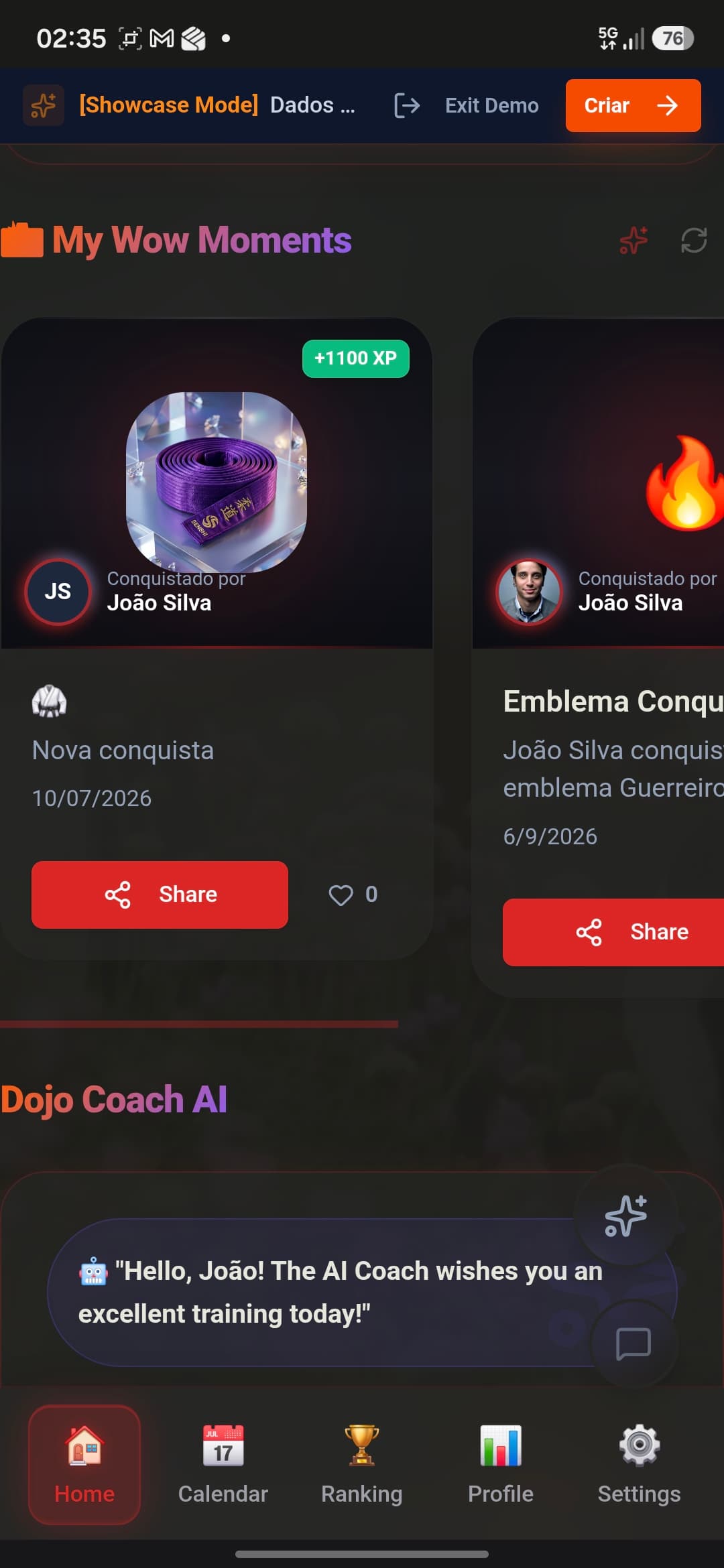
At the end of each session, students check off completed micro-benchmarks inside their student profile. Achieving 10 Volume Goals, 10 Precision Goals, and 10 Defensive Trigger Goals unlocks eligibility for intermediate rank exams, specialized technical seminars, or academy apparel milestones. Physical exertion is transformed into systematic achievement.
Comparative Matrix: Traditional Boxing Instruction vs. Gamified Round-Goal Architecture
| Operational Dimension | Traditional Boxing Academy Model | Gamified Round-Goal Architecture (Dojo10 Standard) |
|---|---|---|
| Pedagogical Directive | Vague ("Hit the bag harder", "Push the pace") | Specific ("Score 25 clean 1-2-3 combinations with angle reset") |
| Psychological Feedback | High Cortisol, zero perceived progression | Controlled Cortisol, high Dopamine via micro-victories |
| Student Perception of Round 4 | "I am exhausted, clumsy, and out of shape." | "I hit 22 of my 25 target entries; 3 more for mastery." |
| Coaching Consistency | Highly variable; dependent on coach personality | Fully standardized via operational curriculum rubrics |
| Average 90-Day Churn Rate | 35% – 48% (Industry Average) | Under 12% across commercial demographics |
| Sparring Readiness Path | Ambiguous; coach decides subjectively | Objective; validated across verified tactical benchmarks |
| Long-Term Engagement Anchor | Physical fitness / Caloric burn | Technical rank, competency milestones, and peer status |
Common Pitfalls and How Elite Academies Avoid Them
Even with clear intentions, gym operators stumble during rollout if they fail to manage operational complexity.
1. Conflating Volume with Quality (The "Cardio-Kickboxing Trap")
A frequent failure mode is turning round goals purely into high-volume punch counting. If a novice throws 300 jabs in three minutes with poor elbow flare, an open chin, and a dropped rear hand, you have reinforced destructive motor patterns. Elite academies enforce Quality Gating: strikes only register toward the round goal if technical standards (e.g., chin tucked, opposite hand glued to the zygomatic arch) are strictly preserved.
2. Cognitive Overload in Novice Demographics
Instructors often design complex combinations featuring slips, weaves, and five-punch sequences for members still struggling with basic weight transfer. Keep round goals mechanically minimal for the first 90 days. A round goal consisting of Jab - Reset - Double Jab performed with elite mechanics delivers higher retention than an over-engineered tactical drill that makes the student feel incompetent.
3. Disconnected Tracking Mechanisms
If round achievements stay written on disposable gym whiteboards, the motivational momentum evaporates in the parking lot. Progress must survive outside the four walls of the gym to influence monthly subscription renewal decisions.
How Dojo10 Automates Round-Goal Gamification and Scaled Retention
Executing a rigorous, gamified boxing framework manually requires immense administrative labor that distracts your coaches from teaching. This is precisely why Dojo10 was built: to operationalize martial arts mastery and convert structure into automated academy retention.
[Student Profile: Dojo10 App]
   |---> Tracks: 25 Precision Rounds Completed
   |---> Unlocks: Level 2 Boxing Band / Technical Milestone
   |---> Alerts Coach: Member Qualified for Advanced Technical Sparring
   |---> Automates Retention: Celebrates Progress Before 60-Day Churn Window
Through Dojo10’s combat sports management engine, academy owners can:
- Standardize Class Curricula: Distribute standardized Round Goal protocols across all class slots and satellite locations with zero drift in instructional quality.
- Digitize Non-Belt Progressions: Boxing historically lacks the belt hierarchy of BJJ or Judo. Dojo10 bridges this gap by providing digital skill-trees, patch/band progression tracking, and verifiable round-mastery badges that give boxing members the continuous status recognition they crave.
- Predict and Preempt Member Churn: The platform tracks real-time member check-ins against completed milestone metrics. If a member misses their typical round targets or shows signs of pedagogical stagnation, Dojo10’s automated retention triggers alert your staff to intervene long before the member submits a cancellation request.
By leveraging the science of gamification through the robust technological infrastructure of Dojo10, your academy stops bleeding members at month three and begins building an unbreakable community of technical, dedicated martial artists.
Frequently Asked Questions (FAQ)
How do Round Goals work for brand-new students who cannot complete high-volume rounds?
Round Goals are never solely based on volume; they are calibrated to mechanical fidelity. For day-one students, the goal is often capped at low repetitions (e.g., 15 completed repetitions of a clean jab-cross with rear foot pivot across a three-minute round). This emphasizes posture, breath regulation, and structural safety rather than aerobic exhaustion, validating competence early.
Does adding gamified goals to traditional boxing dilute the authenticity of the training?
No. In fact, it honors the sweet science far more than modern "cardio boxing" fitness classes. Professional fighters have used constraint-led round goals for decades (e.g., throwing only body shots in Round 2, working exclusively off the ropes in Round 4). Systematizing this practice simply demystifies boxing pedagogy for recreational athletes, elevating technical accuracy throughout the academy.
How do we prevent coaches from abandoning the Round Goal curriculum during peak hours?
Coaching drift occurs when tracking systems are overly complex. With Dojo10, the class curriculum is pre-programmed and easily accessed via digital tablets mounted in the training area or through the coach's mobile interface. Instructors announce the pre-set round goals, assign partner tracking pairs, and verify achievements with a single tap, removing administrative burdens during floor hours.
Official Martial Arts Management Matrix & Evaluation PDF
Download our comprehensive comparison matrix in PDF and see how fight gyms save 15+ hours weekly.