The Silent Attrition Epidemic: The Biology of Student Dropout
Every martial arts academy owner knows the heartbreak of the "vanishing student." A dedicated white belt or promising intermediate practitioner trains four days a week with relentless enthusiasm. They purchase team gear, attend seminars, and bring their friends. Then, around month five or six, their attendance stumbles. First, it drops from four days to two, then to sporadic visits, and finally into the dreaded cancellation email: "I’m dealing with chronic lower back pain and tight hips; my doctor says I need to take a break."
In martial arts management, this is not an anomaly; it is an endemic operational failure. We celebrate hard rounds, intense sparring, high-impact throws, and gruelling conditioning, yet we leave recovery entirely to chance. When academies neglect deliberate mobility and joint integrity, they unknowingly construct a student pipeline directly into orthopedic failure.
The business cost is devastating. In typical Brazilian Jiu-Jitsu, Muay Thai, and MMA academies, the standard monthly churn rate hovers between 6% and 9%. More than 40% of these departures stem directly from chronic microtrauma, systemic overtraining, or acute injuries caused by compromised movement patterns. If your school has 200 active members paying an average of $160 per month, an 8% monthly churn means losing 16 students every 30 days. To maintain baseline revenue, your marketing engine must acquire 192 new students annually just to stand still.
Integrating targeted mobility and restorative yoga into your dojo reverses this trajectory. It directly shifts your business model from an extractive grindhouse to a sustainable, high-retention athletic sanctuary.
Core Theoretical Framework: Parasympathetic Upregulation and LTV Mathematics
Ready to eliminate admin burden and student churn?
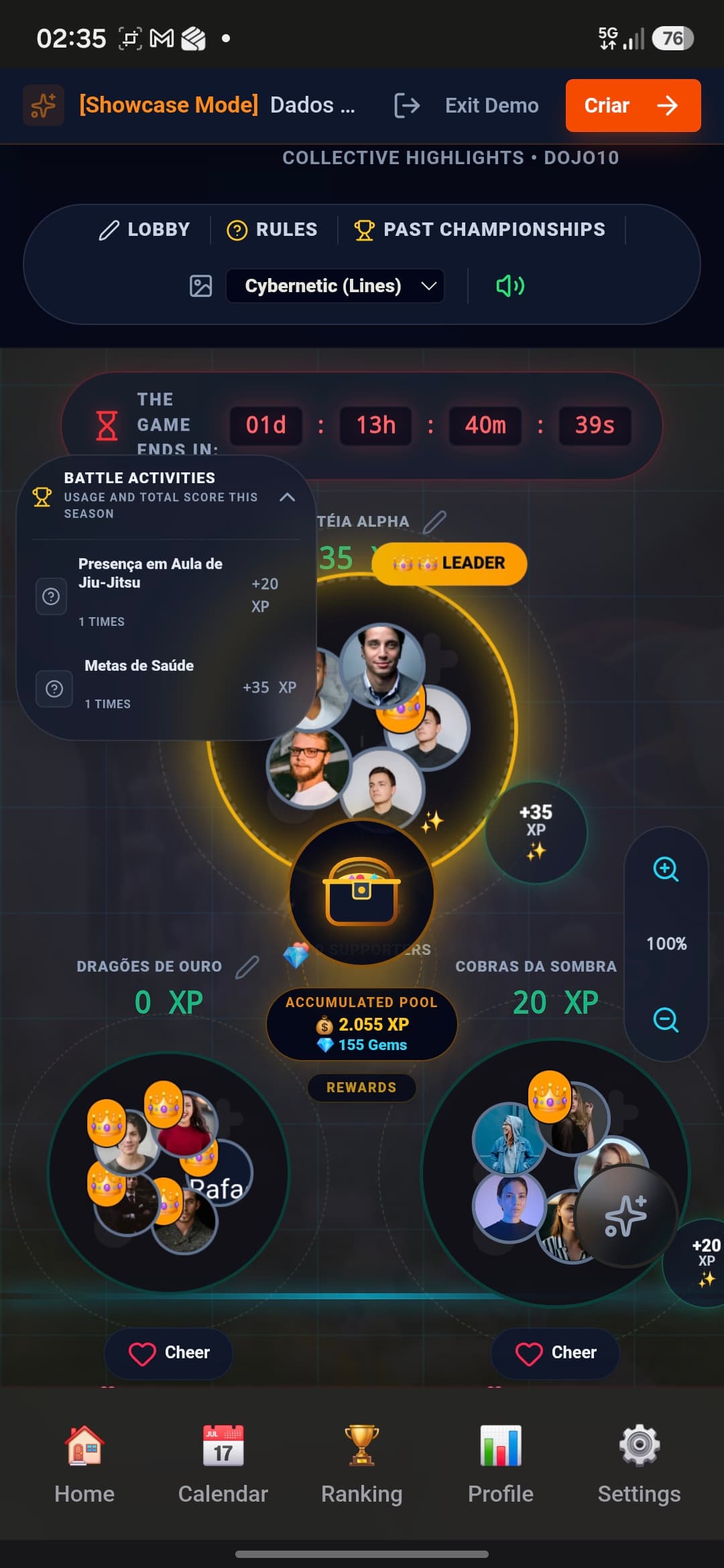
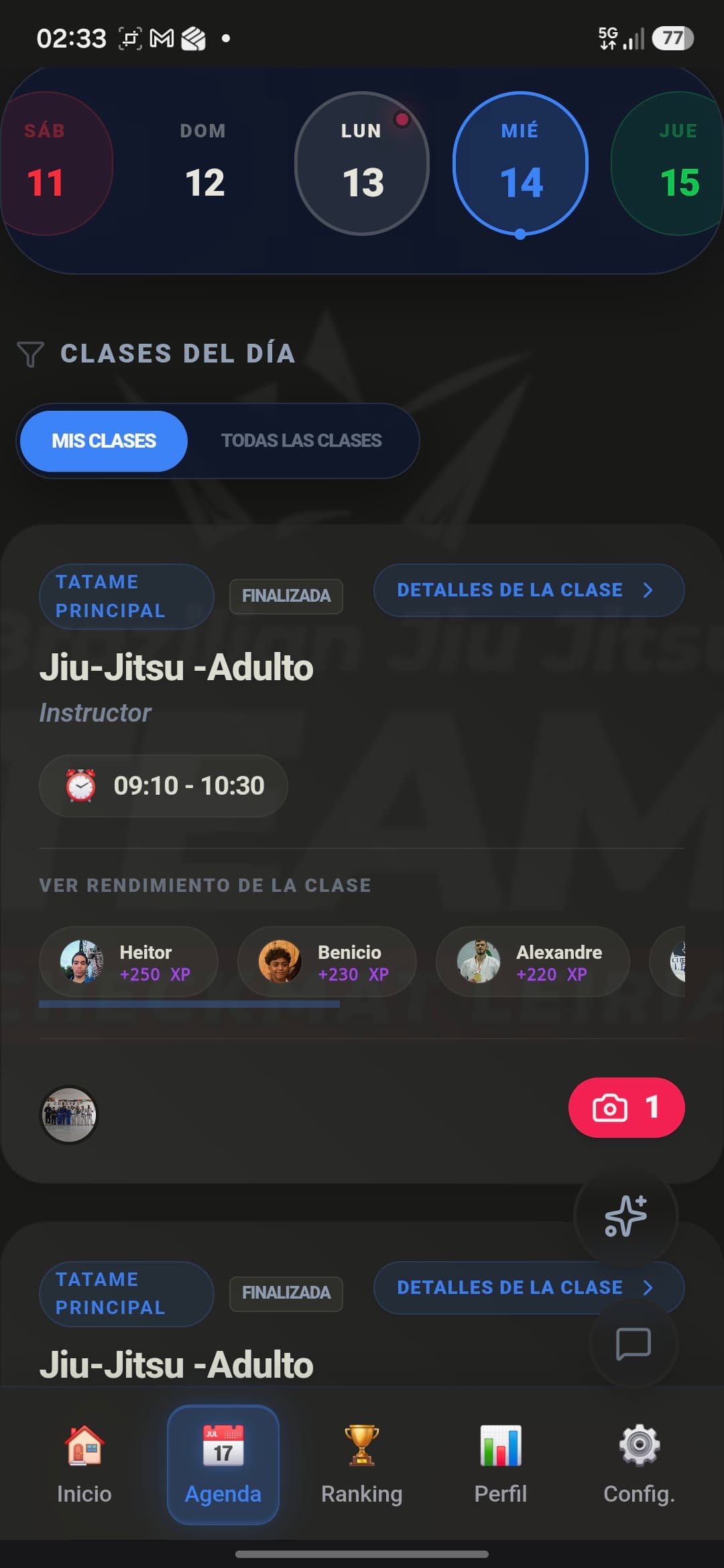
Dojo10 automates belt gradings, QR Code attendance, recurring billing, and clan gamification. No credit card required.
Traditional martial arts training operates almost exclusively in a state of sympathetic nervous system overdrive. Fight-or-flight mechanisms trigger high cortisol, sustained muscle tone, elevated heart rates, and chronic connective tissue loading. While this drives tactical adaptation and anaerobic endurance, perpetual sympathetic activation compromises deep tissue repair, shortens fascial planes, and leads to neuro-endocrine exhaustion.
The Physiological Mechanism: Restoration as Training
Restorative yoga and intentional mobility protocols initiate a conscious shift into the parasympathetic nervous system (the "rest-and-digest" state). Regulated nasal breathing (pranayama), joint centration, and sustained end-range loading trigger several physiological adaptations: 1. Myofascial Plasticity: Dynamic mobility hydrates dry, adhered fascial sheets caused by high-impact impacts, restoring glide between muscle fibers. 2. Joint Centration & Mechanoreceptor Reset: Poses such as deep hip openers (Baddha Konasana, Anjaneyasana) decompress the femoral head within the acetabulum, directly mitigating the impingements common in kickers and guard players. 3. Cortisol Downregulation: Sustained static decompression promotes lymphatic drainage and clears systemic markers of inflammation, significantly cutting recovery latency between training sessions.
The Unit Economics of a Mobility Retentive Engine
Let us analyze the financial leverage of injury mitigation on Customer Lifetime Value (LTV):
$$\text{LTV} = \frac{\text{Average Monthly Revenue per Student (ARPU)}}{\text{Monthly Churn Rate}}$$
Consider an academy with an ARPU of $175: - Baseline Operation (No Recovery Culture): Churn = 7.5%. LTV is approximately $2,333 (Average stay: 13.3 months). - Optimized Operation (Mobility Integrated): Churn drops to 4.0% by mitigating injury-induced dropouts. LTV leaps to $4,375 (Average stay: 25 months).
By cutting churn by just 3.5 percentage points, each individual student becomes worth an additional $2,042 in top-line revenue over their lifecycle, without spending a single additional marketing dollar on top-of-funnel acquisition.
Practical 5-Step Implementation Blueprint: Integrating Mobility & Yoga
Transitioning from an ad-hoc stretch at the end of class to an engineered recovery system requires a structured operational cadence. Follow this 5-step blueprint to roll out an elite recovery program.
[Step 1: 8-Min Micro-Modules] ➔ [Step 2: Sunday Restorative] ➔ [Step 3: Dual-Tier Pricing] ➔ [Step 4: Injury Screenings] ➔ [Step 5: Hybrid Home Tracking]Step 1: Institutionalize 8-Minute End-of-Class "Recovery Bridges"
Do not dismiss students directly after heavy sparring or intense technical sparring. Enforce an 8-minute, coach-led post-class down-regulation protocol before anyone leaves the mat. Focus exclusively on: - Diaphragmatic box breathing (4s inhale, 4s hold, 4s exhale, 4s hold) to downregulate neural tone. - Post-chain decompression (Adho Mukha Svanasana to Balasana). - Thoracic spine rotations to release torque accumulated from rotational striking and guard postures.
Step 2: Establish Dedicated "Martial Mobility & Restorative Yoga" Weekly Classes
Schedule a 60-minute recovery-exclusive session during traditional downtime (e.g., Sunday morning or mid-day Saturday). Design this session specifically for martial artists, eschewing esoteric spiritual language in favor of biomechanical restoration, fascial ungluing, and active range-of-motion work. Brand it accurately: "Fighter Recovery Protocol" or "Grappler’s Mobility Matrix."
Step 3: Package as a Multi-Tier Value Proposition
Transform recovery from an operational expense into an immediate profit center: - Tier 1 (Core Martial Arts): Access to standard striking or grappling classes. - Tier 2 (Warrior Athlete / Unlimited + Recovery): Includes unlimited martial arts plus access to all weekly yoga and mobility modules (+$39–$49/month). - Tier 3 (Standalone Recovery Pass): Targeted at injured athletes or spouses of members who want mobility without physical combat ($99/month).
Step 4: Implement Bi-Monthly Mobility Screenings
Incorporate simple range-of-motion benchmarks into your curriculum reviews: ankle dorsiflexion, passive straight-leg raise, and shoulder flexion. When students see their mobility scores directly correlated with their guard retention or kick trajectory, compliance skyrockets.
Step 5: Leverage Hybrid Digital At-Home Prescriptions
Do not let recovery stop at your front door. Provide students with curated 10-minute follow-along routines they can perform on non-training days via an integrated digital platform. This reinforces daily habit formation, keeps your academy top-of-mind, and ensures consistency.
Targeted Martial Mobility & Yoga Matrix
The following matrix details authentic, anatomically verified postures, their physiological targets, martial biomechanical applications, and operational integration:
| Sanskrit / Anatomical Pose | Primary Muscle & Joint Target | Targeted Martial Impairment | Optimal Round / Timing | Retention & Performance Impact |
|---|---|---|---|---|
| Anjaneyasana<br>(Low Crescent Lunge) | Iliopsoas, Rectus Femoris, Joint Capsule of Hip | Anterior pelvic tilt, hip flexor shortening from guard play and low fight stances | 3–5 min holds; end of class or recovery day | Restores pelvic neutrality; increases roundhouse kick height; alleviates chronic L4-L5 compression. |
| Adho Mukha Svanasana<br>(Downward-Facing Dog) | Posterior Chain: Gastrocnemius, Hamstrings, Thoracolumbar Fascia | Plantar fasciitis, calf cramping from footwork, compressed posterior kinetic chain | 5 deep breath cycles between technical sparring rounds | Enhances explosive entry velocity in double-leg takedowns; prevents Achilles tendinitis. |
| Gomukhasana<br>(Cow Face Arms / Hips) | External Rotators of Shoulder, Latissimus Dorsi, Piriformis | Rounded shoulders from boxing guard; tight glutes from bridging and sprawling | 2–3 min per side; Post-Sparring / Recovery Class | Restores overhead glenohumeral clearance; directly prevents rotator cuff tears from kimuras and underhooks. |
| Malasana<br>(Garland / Deep Squat) | Hip Adductors, Pelvic Floor, Ankle Dorsiflexors | Inability to sit deep in wrestling stances; restricted closed guard mobility | 90–120 seconds active hold; Pre-Class Warmup or Bridge | Unlocks deep hip mobility; drastically reduces knee collateral ligament strains by improving ankle mobility. |
| Supta Padangusthasana<br>(Reclining Hand-to-Big-Toe) | Hamstrings, Sciatic Nerve Pathway, Calves | Hamstring avulsions from sprawl; sciatic impingement from repetitive kicking | 2 min hold per leg with strap; Sunday Recovery Class | Eliminates neurodynamic tension; dramatically expands guard reach and submissions like triangles and omoplatas. |
| Viparita Karani<br>(Legs-Up-The-Wall Pose) | Vascular & Lymphatic Drainage, Central Nervous System | Systemic fatigue, peripheral fluid pooling, sympathetic overload | 7–10 minutes post-training or prior to sleep | Accelerates metabolic waste clearance; drives deep parasympathetic reset to supercharge overnight sleep quality. |
Common Pitfalls and How Elite Academies Avoid Them
- Pitfall 1: Outsourcing to Instructors Without Martial Context
- The Error:* Hiring a generic yoga teacher who insists on prolonged, hyper-passive stretching or focuses on alignment paradigms that contradict grappling stability, causing joint laxity.
- The Elite Solution: Educate your own black belts and senior instructors in mobility systems, or partner with yoga teachers who explicitly understand combat sport biomechanics, focusing on active end-range control* rather than passive hyperextension.
- Pitfall 2: Treating Recovery as a Punitive or Optional Add-on
- The Error: Announcing, "Class is over, stay and stretch if you want,"* resulting in 90% of students packing their bags immediately.
- The Elite Solution:* Make the recovery protocol an integral, non-negotiable chapter of the class schedule. The clock runs until the down-regulation breathing and mobility sequence concludes.
- Pitfall 3: Failing to Monetize and Track Utilization
- The Error:* Offering Sunday classes without attendance tracking, treating them as low-priority sessions that eventually fizzle out due to perceived lack of interest.
- The Elite Solution:* Gate the recovery programming with automated access tiers. Track attendance rigorously to prove value and isolate retention improvements between cohorts.
How Technology & Dojo10 Automates This Operational Standard
Adopting a high-retention mobility protocol without modern software infrastructure introduces administrative chaos. Dojo10 provides the operational operating system required to automate, monetize, and scale this model seamlessly:
- Cohort-Based Retention Analytics: Dojo10’s business intelligence dashboard tracks member longevity, automatically isolating the retention delta between students who regularly check into mobility sessions versus those who attend only sparring.
- Automated Recovery Triggers: Set intelligent alerts within Dojo10. If an advanced student checks into 5 intense sparring sessions in 7 days, the system can automatically send an automated SMS or push notification recommending a restorative class to preempt overtraining injuries.
- Frictionless Membership Tier Upgrades: Easily manage hybrid memberships within Dojo10. Students can seamlessly upgrade from standard martial arts plans to "All-Access Martial & Mobility" packages with one-click in-app upgrades and automated billing changes.
- Digital Content Integration: Deliver on-demand, branded follow-along mobility videos directly through the Dojo10 student portal, ensuring your members maintain optimal tissue health even when traveling.
Official Martial Arts Management Matrix & Evaluation PDF
Download our comprehensive comparison matrix in PDF and see how fight gyms save 15+ hours weekly.