The Hidden Operational Blindspot on the Modern Mat
Walk into the average martial arts academy during peak evening hours, and you will witness an unspoken operational breakdown. Instructors scream over ambient noise to signal the end of a sparring round. Students stand idle, unsure who is up next in the sparring rotation or when the next technical drill begins. Vital academy notices—upcoming grading exams, weekend master seminars, or belt promotions—rot away unnoticed on paper bulletin boards behind the front desk.
This friction is not merely an aesthetic problem; it is a financial and pedagogical leak. When mat logistics rely on manual intervention, instructors suffer cognitive exhaustion, training tempo collapses, and students experience a disjointed class environment. Without visual milestones or tangible tracking, student motivation wanes, silently accelerating mid-tier churn.
Transforming the training environment requires visual infrastructure. Commercial gym chains and boutique fitness studios have long leveraged digital signage to engineer behavioral compliance. For martial arts dojos, dojangs, and combat sports academies, tactical TV displays—specifically configured for round timing, real-time leaderboards, and contextual announcements—serve as the visual nerve center of the floor.
Core Theoretical & Pedagogical Framework
Ready to eliminate admin burden and student churn?
Dojo10 automates belt gradings, QR Code attendance, recurring billing, and clan gamification. No credit card required.
Implementing tatami TV displays is not about mounting a television to play music videos. It is an intentional application of cognitive ergonomics, social proof, and bioenergetic conditioning.
1. Attenuation of Cognitive Load and Acoustic Fatigue
In an active martial arts setting, auditory processing is constantly compromised. Striking bags, grappling mats, background audio, and physical exertion create high-decibel environments. When an instructor relies solely on whistles or voice commands, students experience auditory fatigue, leading to delayed reactions and broken drills.
Visual cues operate via the dorsal stream of the visual cortex, processing spatial orientation and instantaneous temporal data with significantly lower cognitive load. A high-contrast digital round timer allows a student in the middle of an intensive sequence—whether defending a guard pass or executing a Dutch kickboxing combination—to evaluate remaining time in their peripheral vision within 200 milliseconds, self-regulating energy output without interrupting movement.
2. The Hawthorne Effect and Gamified Social Proof
Gamification in martial arts succeeds when it reinforces tradition rather than trivializing it. The Hawthorne Effect establishes that individuals modify their behavior when they observe that their performance is measured and displayed.
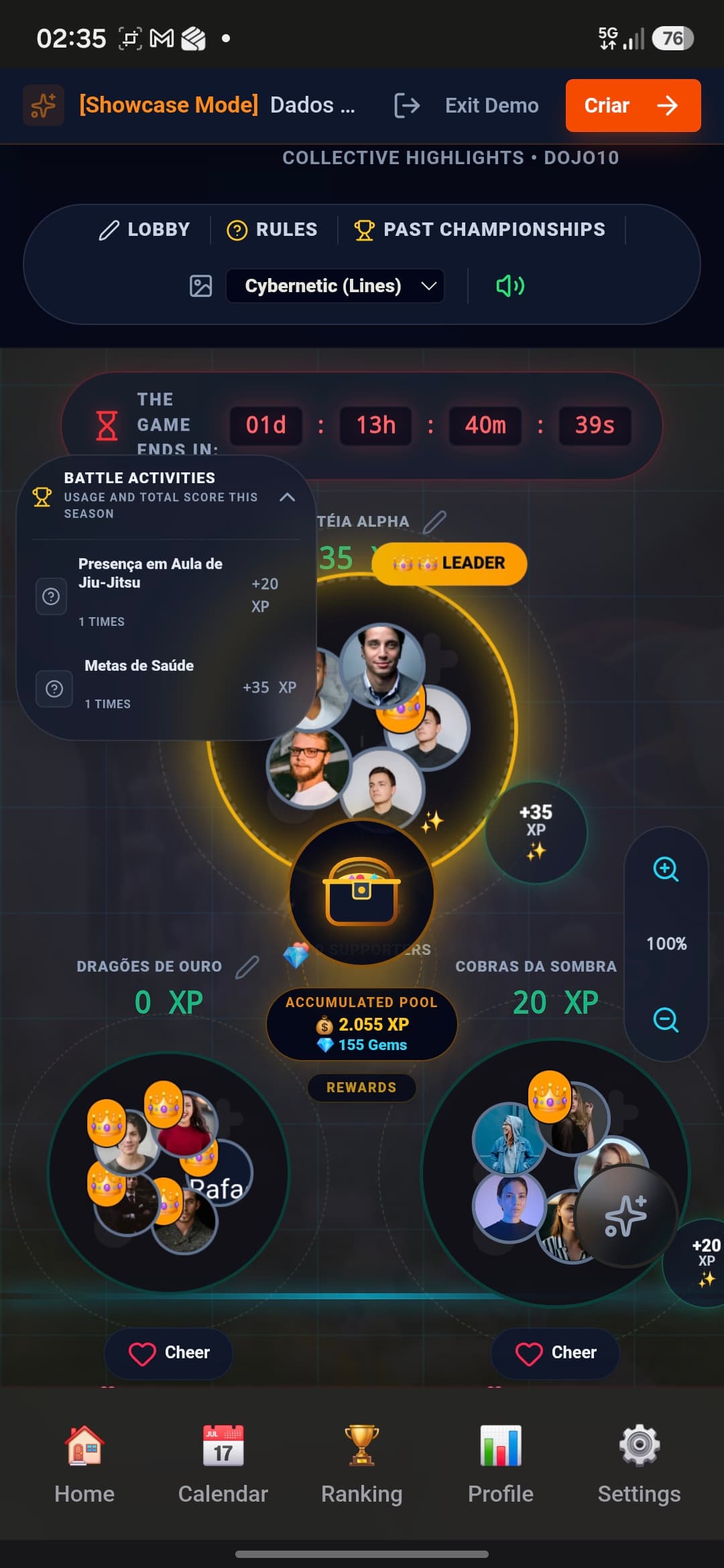
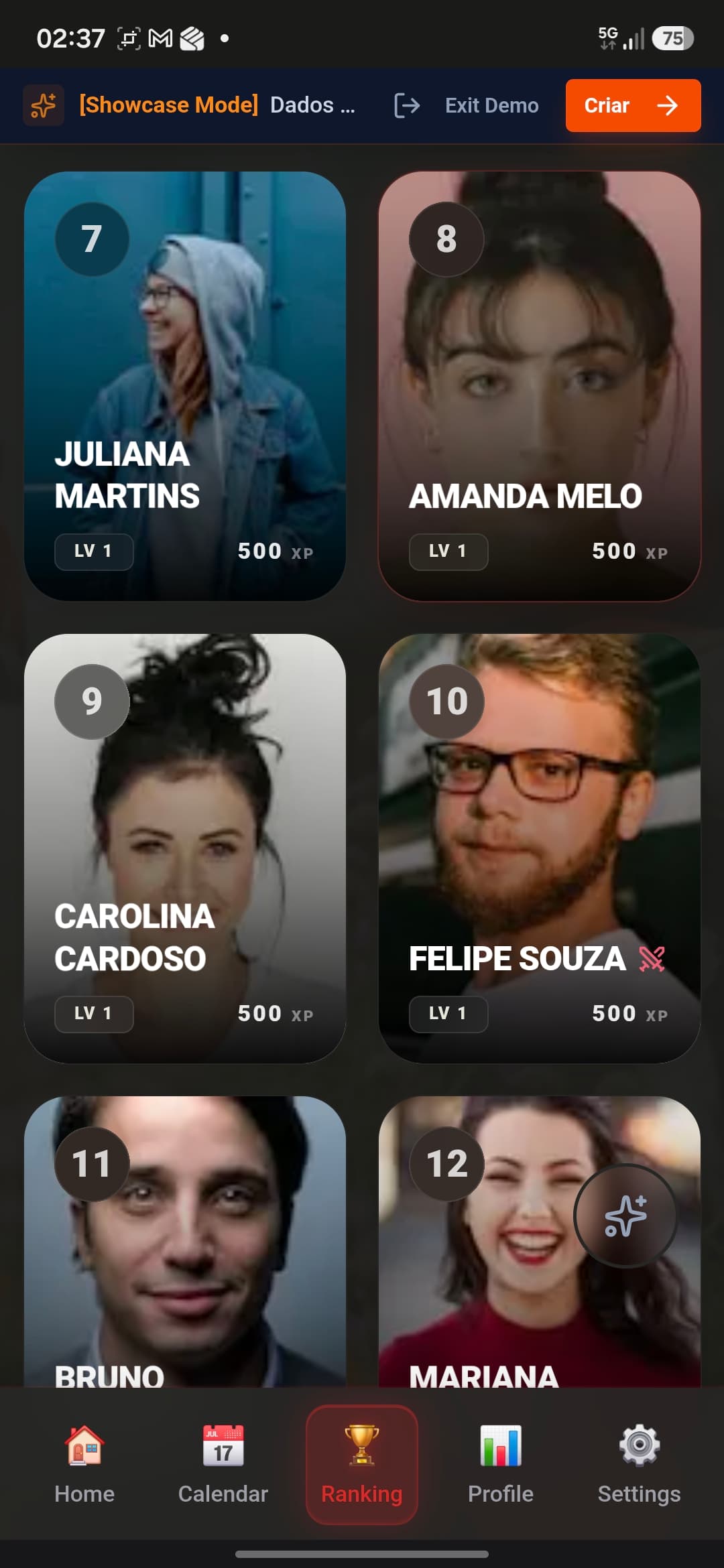
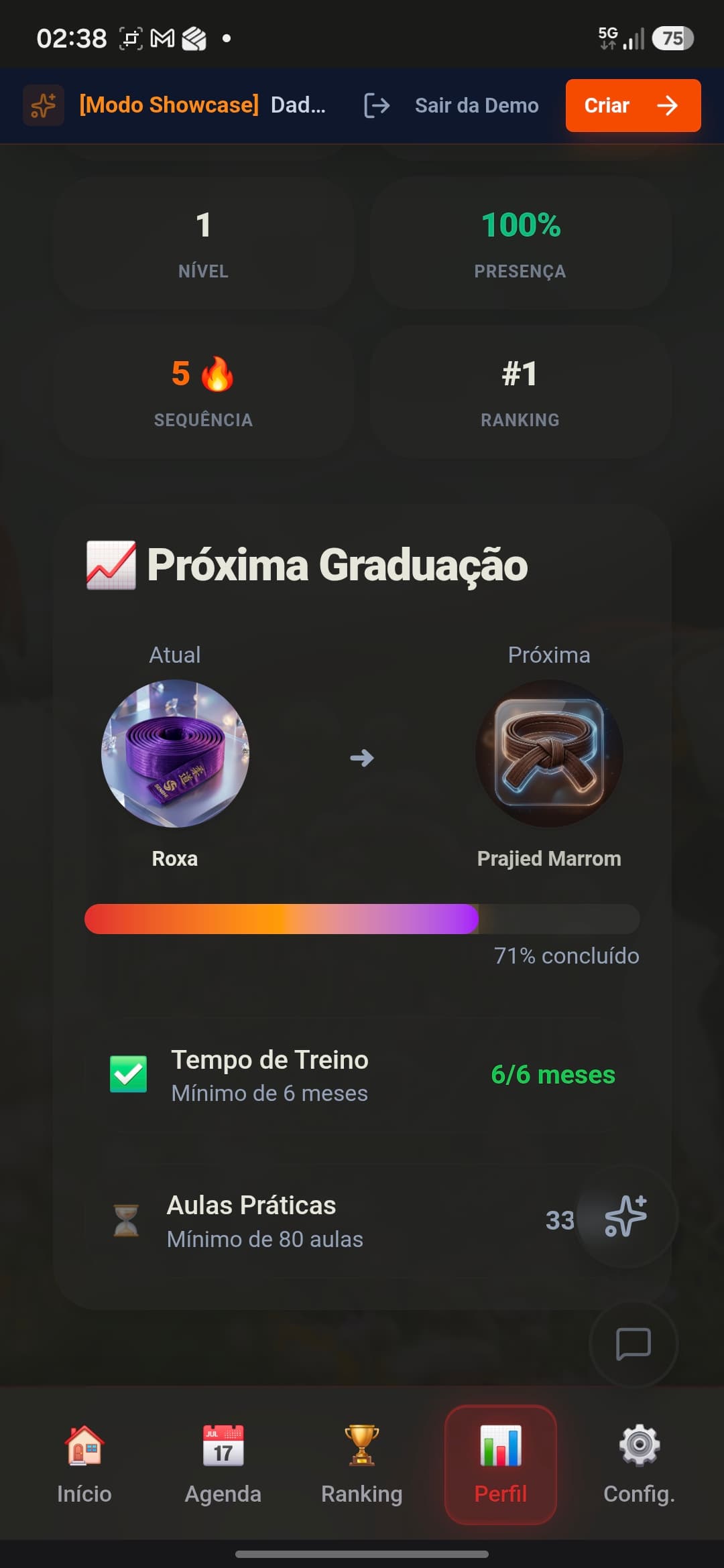
When a TV panel displays a live "Mat Hours This Month" board, an active streak counter, or a technical leaderboard, it taps into the fundamental human drive for status, validation, and peer recognition. A student who sees their profile recognized for attending 16 classes in a month or completing 100 rounds of sparring internalizes a deeper martial identity. The public nature of the display validates the grueling, invisible effort poured into the mat.
3. Bioenergetic Synchronization
Every martial discipline relies on strict physiological energy systems. Phosphagen bursts require precise rest intervals to avoid premature lactic pooling, while aerobic glycolytic conditioning demands rigorous work-to-rest ratios. Analog kitchen timers or wristwatches consistently lead to "coach drift," where rest periods stretch from 60 seconds into three minutes due to mat-side conversations. Automated, wall-mounted visual protocols enforce physiological compliance, ensuring athletes train within their target bioenergetic zones.
5-Step Implementation Blueprint for Tatami TV Ecosystems
Deploying high-impact mat displays requires a structured rollout that accounts for sightlines, software orchestration, and pedagogical integration.
Phase 1: Sightline Optimization and Hardware Hardening
Mount displays at a minimum height of 2.4 meters (8 feet) measured from the base of the tatami to the lower bezel of the screen. This elevates the panel above the heads of standing practitioners and completely outside the impact trajectory of takedowns or errant kicks. * Panel Spec: Commercial-grade 4K LED panels (minimum 400 nits brightness) equipped with anti-glare matte finishes to counter overhead fluorescent or LED strip lighting. * Field of View: Position screens directly opposing the primary sparring zone, ensuring a viewing angle between 60° and 90° from any active drill quadrant. * Protection: Encase panels in low-profile, ventilated acrylic enclosures to prevent stray equipment impacts.
Phase 2: Dynamic Tri-Zone Screen Architecture
Avoid screen clutter. The visual display should operate on a prioritized visual hierarchy: * Primary Zone (65% screen real estate): Active Telemetry & Timer. High-visibility numerical display of round time, interval cadence, and current phase (Warmup, Drill, Sparring, Active Recovery). * Secondary Zone (20% screen real estate): Gamified Leaderboard & Student Recognition. Rotating cards highlighting mat streaks, monthly attendance leaders, and recent rank advancements. * Tertiary Zone (15% screen real estate): Institutional Broadcasts. Upcoming grading dates, seminar registrations, house rules, or sponsor highlights displayed via high-contrast ticker feeds.
Phase 3: Calibrating Modality-Specific Round Templates
Program the timer protocols to align precisely with discipline-specific pedagogical demands rather than generic boxing rounds: * Brazilian Jiu-Jitsu (Sparring Blocks): 6-minute rounds, 45-second reset intervals, with a mid-round audible/visual chime at the 3-minute mark indicating position resets or king-of-the-mat rotations. * Muay Thai / Kickboxing (Pad Rounds): 3-minute rounds with 30-second hyper-intensity intervals signaled by screen color shifts (e.g., green shifts to red for burnout flurries), followed by 1-minute recovery. * Judo / Wrestling (Shark Tank Conditioning): 1-minute continuous rounds with 10-second rotational intervals for inbound fresh partners, requiring massive full-screen countdowns.
Phase 4: Activating Behavioral Gamification Loops
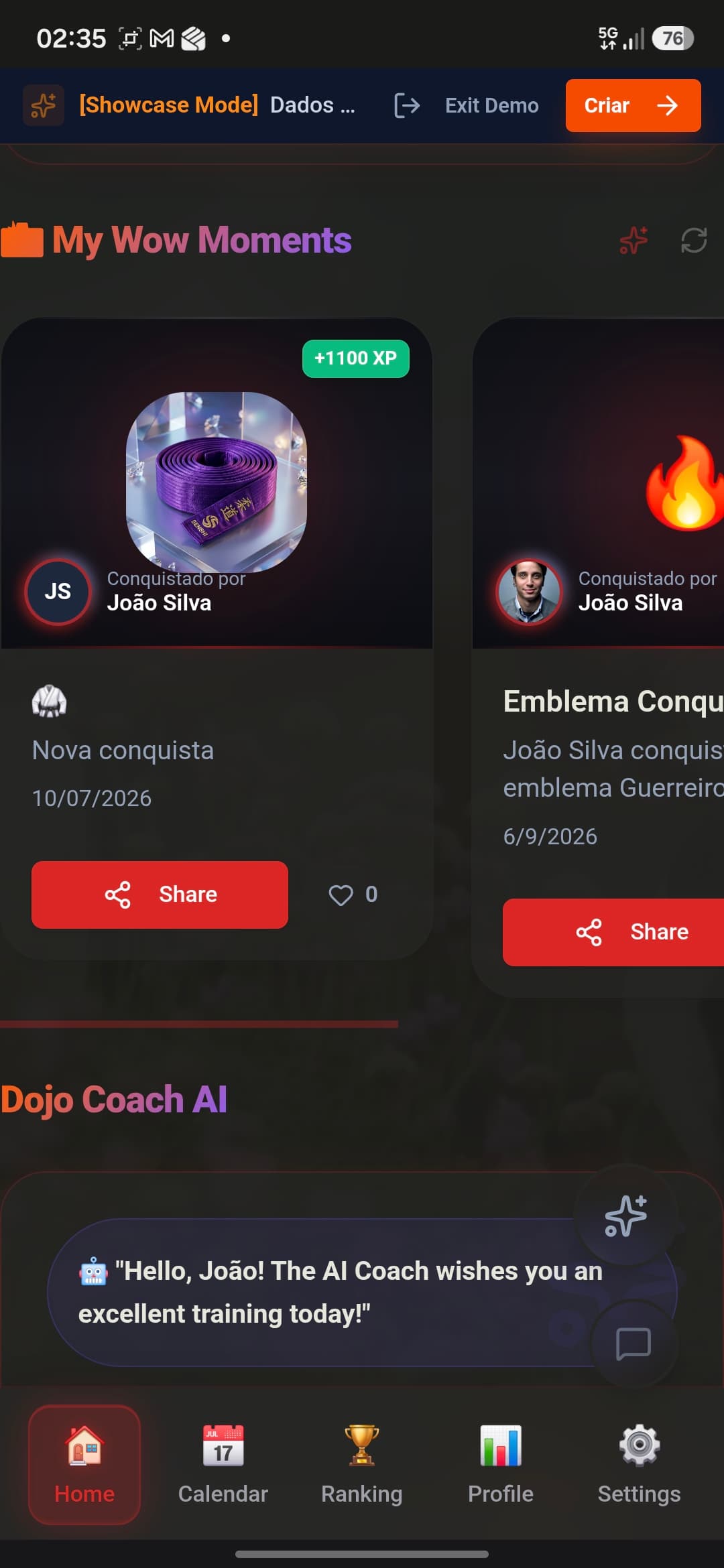
Configure your platform to pull live data from your management software to cycle community accomplishments during the final 30 seconds of rest intervals: * Highlight "Iron Mat" members who have logged over 12 sessions in 30 days. * Celebrate technical milestones (e.g., completion of the 12-week fundamental curriculum). * Acknowledge student birthdays or belt promotion anniversaries. The brief burst of public recognition during physical fatigue triggers a positive dopamine feedback loop tied directly to the dojo environment.
Phase 5: Autonomous Event Mode Switching
Eliminate manual reconfiguration during the transition from regular curriculum to competition or seminar mode. Establish automated presets where a single tap transitions the TV from a daily class timer into an official tournament scorekeeper, a belt exam technical checklist, or a professional seminar display highlighting guest instructor credentials.
Modality-Specific TV Panel Matrix
The following matrix illustrates how visual display telemetry adapts across different martial arts modalities to optimize training efficiency, pedagogical discipline, and gamification.
| Modality | Core Form / Technical Focus Displayed | Round & Rest Cadence | Visual Telemetry & Color Protocol | Primary Gamification Trigger |
|---|---|---|---|---|
| Brazilian Jiu-Jitsu | Positional Sparring (Guard Retention, Mount Escapes, Leg Lock Systems) | 5 to 7 min work / 45 sec rest; 30-sec positional rotation chime | Amber background (Neutral), Green (Live Roll), Red (Last 30 Seconds) | Sparring Round Milestones & Mat Hours Logged |
| Muay Thai / Kickboxing | Dutch Drills, Clinch Control, 8-Limb Pad Combinations | 3 min work / 1 min rest; 30-sec high-cadence burnout phase | Solid Black with High-Contrast White Digits; Red Flash for Burnout | Total Punch/Kick Output Targets & Streak Days |
| Olympic Taekwondo (WT) | Competition Sparring (Kyorugi), Tactical Stepping, Cut Kick Combos | 2 min work / 1 min rest; 3 rounds per match simulation | Blue vs. Red corner indicators; Visual penalty (Gam-jeom) trackers | Sparring Point Differential & Accuracy Metrics |
| Traditional Kung Fu / Wushu | Taolu Mastery (Wu Bu Quan, Lian Huan Quan, Tan Tui, Dao/Jian) | 90 sec sequence drills / 30 sec structural correction | Gold & Black aesthetic; Step-by-step stance hold progress bar | Kata/Taolu Precision Mastery & Exam Readiness Rating |
| Judo | Uchikomi Speed Runs, Nage-komi, Randori Rotations | 4 min work / 30 sec rest; 15-sec explosive Uchikomi cycles | High-visibility White and Blue tatami designation markers | Throw Velocity Benchmarks & Monthly Randori Count |
Common Pitfalls and How Elite Academies Avoid Them
- The Visual Clutter Catastrophe: Flooding the screen with excessive text, weather widgets, and uncurated social media feeds distracts students and degrades the serious atmosphere of the dojo. Solution: Maintain strict screen zoning. The round clock must always remain the dominant element visible from across the room.
- Static, Outdated Announcements: Displaying a digital graphic for an event that happened three weeks ago signals neglect and trains students to ignore the screen entirely. Solution: Utilize software that dynamically syncs with the school's live event calendar, automatically archiving past events without coach intervention.
- Hardware Vulnerability and Cable Chaos: Hanging power cords and exposed HDMI switches look unprofessional and invite accidental disconnection or damage. Solution: Run in-wall conduit or industrial cable raceways. Power panels through smart plugs set to auto-boot 15 minutes before the first morning class.
- Ignoring Non-Competitive Practitioners: Gamification systems that only praise the fastest, most aggressive fighters alienate recreational practitioners, who comprise 80% of revenue. Solution: Balance leaderboards to reward consistency, technical attendance, and character-based metrics rather than just athletic dominance.
How Technology & Dojo10 Automates This Operational Standard
Executing this high-performance visual floor system manually is unsustainable for an active coach. Dojo10 unifies mat telemetrics, operational announcements, and student gamification into a single, cloud-managed command center.
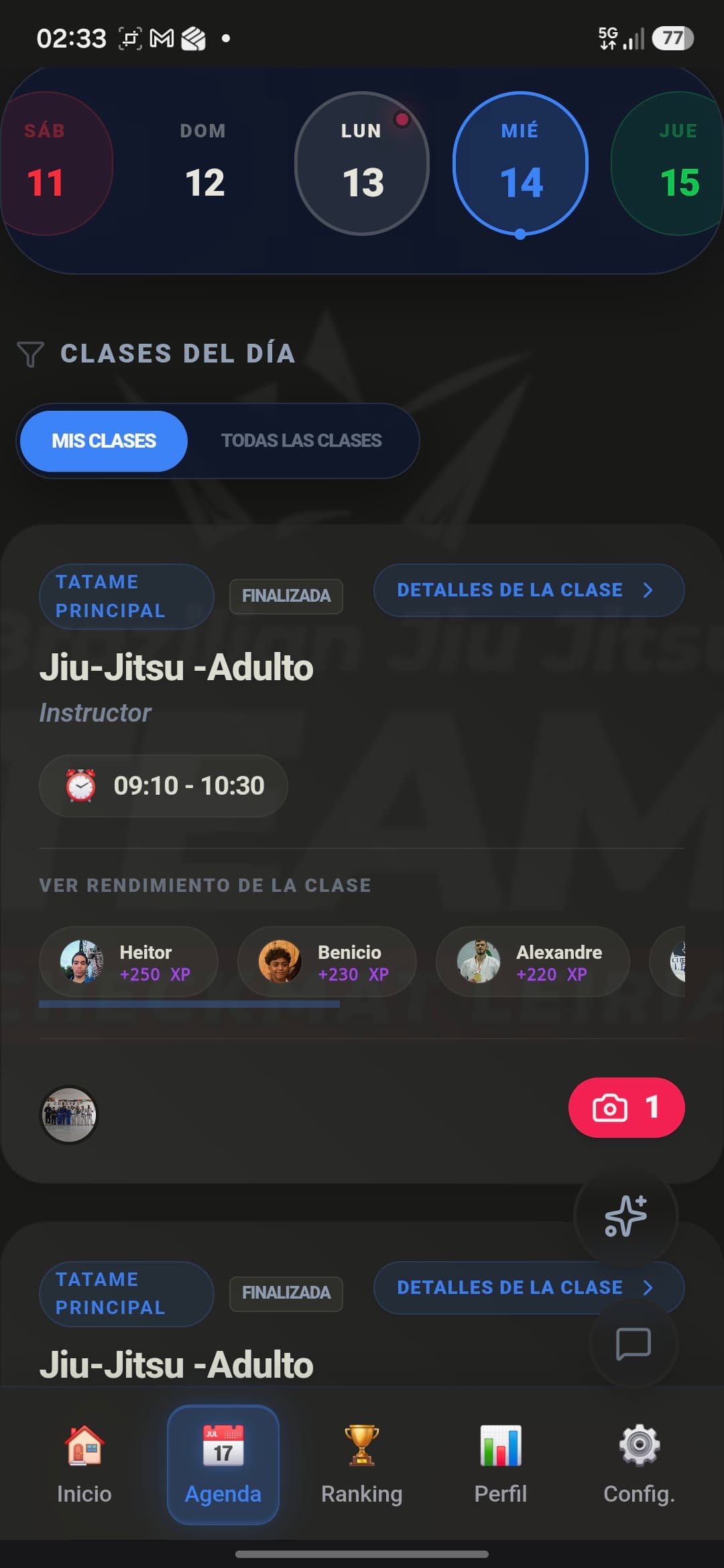
- Zero-Touch Round Management: Dojo10 allows instructors to pre-program daily curriculum timing profiles directly from an Apple Watch, smartphone, or front-desk terminal. The screen updates seamlessly from technical warm-ups into sparring rounds without the coach stepping off the mat.
- Live Gamification Synchronization: Because Dojo10 natively tracks student check-ins, attendance streaks, and syllabus progression, the TV panels automatically generate dynamic leaderboards. When a student checks in at the front desk, their milestone alert queues instantly for display between rounds.
- Omnichannel Event Broadcasting: Schedule seminar fliers, belt grading registrations, and holiday schedules inside the Dojo10 management suite. The system renders them across mat displays during class transition periods, transforming passive downtime into high-conversion event awareness.
By modernizing the physical environment with intelligent digital panels, academy owners reclaim their voice, elevate class pacing, and cultivate an engaged community that stays enrolled for the long haul.
Official Martial Arts Management Matrix & Evaluation PDF
Download our comprehensive comparison matrix in PDF and see how fight gyms save 15+ hours weekly.